
Clean Lines. Clear View.
Event Venue Display Mounting Services
Event venues need displays that large groups can see clearly during presentations, celebrations, and watch parties. We place screens so guests throughout the venue have clear view of the content.
Call or Text: (832) 413-1265
Serving The Greater Houston & Surrounding Areas
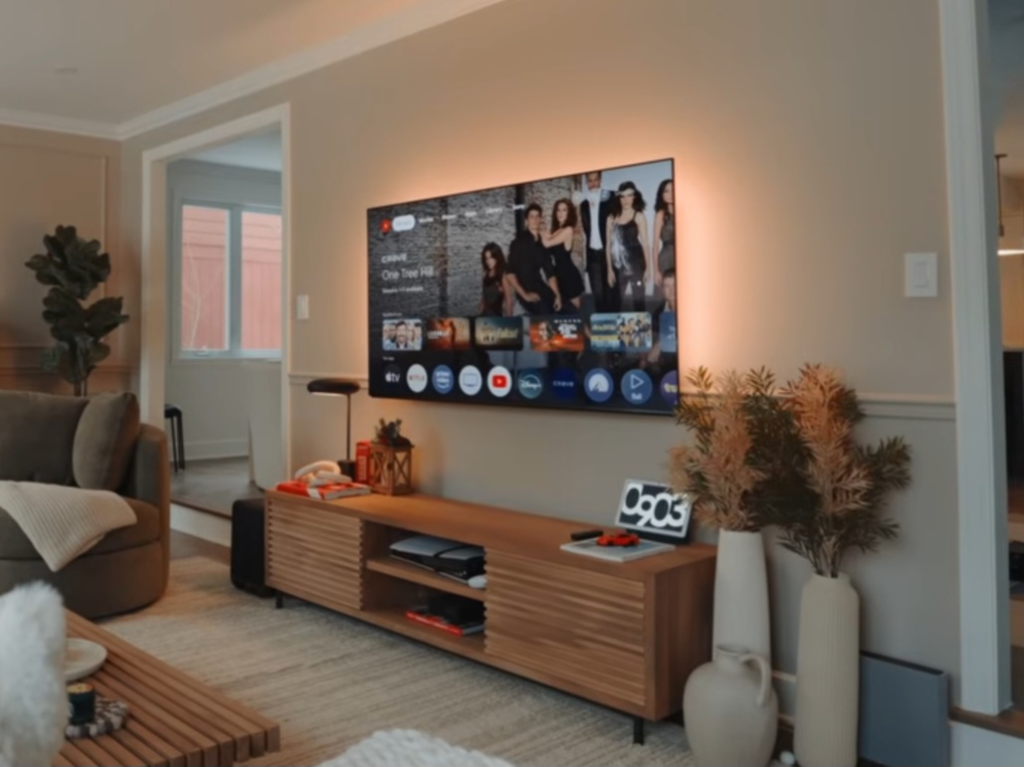

Event-Focused Screen Placement For Large Crowds
Event venues, churches, and multipurpose halls are built around audience experience. When a display is mounted incorrectly, visibility drops immediately for guests seated in back rows or standing during events. Screens that are too high, too small, or poorly aligned with the stage disrupt presentations, lyrics, sermon notes, and event slides.
Our commercial TV installers approach church TV mounting and event venue display installation differently than restaurant or office installs. Height, scale, and crowd flow are considered from the start so screens support the gathering rather than compete with it. The result is a display setup that feels balanced, visible, and appropriate for large audiences.
Stage Alignment And Audience Sightline Planning
In churches, banquet halls, and event venues, screen placement begins with the stage. Pulpits, podiums, performance areas, and presentation zones establish the visual focal point of the room. Our TV mounting technicians measure from the stage elevation outward, determining height based on row depth, seating tiers, and standing areas so displays remain visible from front to back without forcing guests to tilt their heads upward.
Large seating sections require wider sightline calculations than standard commercial spaces. This becomes even more noticeable in rooms designed around sports bar TV layouts. Church display mounting and hall TV installation must account for center aisles, side seating blocks, and balcony areas when present. Our installers position screens so they support sermons, lyric slides, announcements, and live-stream monitors without blocking banners, architectural features, or decorative elements.
Ceiling height also influences mounting decisions. In rooms with vaulted ceilings or tall stage walls, the wrong height can make screens feel distant and disconnected from the service or event. We determine whether wall mounting or ceiling-mounted solutions better support visibility, ensuring the display integrates cleanly into the space while remaining readable for the entire audience.
Structural Mounting For High Ceilings And Public Spaces
Event venues and worship centers often feature tall walls, vaulted ceilings, or wide open stage designs that require mounting at elevated heights. Our TV installers evaluate structural framing, wall composition, and load-bearing capacity before selecting mounting hardware. Concrete block, reinforced drywall over metal studs, and masonry surfaces require different anchoring methods than standard office walls. Secure attachment is critical when displays are positioned above stages or visible to large audiences.
Wall-mounted and ceiling-mounted displays are chosen based on sightline depth, ceiling height, and architectural limitations. In some halls, ceiling mounting provides better viewing angles for deep seating areas. In others, reinforced wall installation keeps displays aligned with stage elements. Each decision is based on how the space functions during services or events, not just where open wall space exists.

Safety becomes especially important in spaces that host large gatherings. Displays must remain stable during weekly services, community events, and high-attendance ceremonies. Our technicians use hardware rated for elevated installation and confirm secure fastening before completion. Mounting points are tested for stability so screens remain level and unmoving even in high-traffic public settings.
Symmetry is also addressed during structural installation. In churches and banquet halls where multiple screens flank a stage, alignment must remain consistent across sightlines. Displays are measured against stage centerlines and architectural features to maintain visual balance. The same level of alignment matters with conference room presentation screens. The finished result supports audience engagement while maintaining a clean and organized stage presentation.
Frequently Asked Questions
How high should TVs be mounted in a church or event hall?
Height is determined by stage elevation, seating depth, and whether the audience is primarily seated or standing. Screens are positioned so back rows can read content clearly without forcing front rows to look uncomfortably upward.
How high should TVs be mounted in a church or event hall?
Yes. Elevated walls and ceiling structures are evaluated to determine whether wall mounting or ceiling mounting provides better visibility and stability. Mounting hardware is selected based on structural support and height requirements.
Is mounting secure enough for large public gatherings?
Yes. Displays are anchored using hardware rated for commercial and public spaces. Stability is verified so screens remain secure during services, events, and high-attendance gatherings.
Will screens align properly with the stage or pulpit?
Yes. Alignment is measured against stage centerlines, podium placement, and architectural features to maintain symmetry and visual balance across the presentation area.
Can multiple screens be mounted evenly across a stage?
Yes. Multi-screen installations are measured carefully so displays match in height, spacing, and angle, creating a consistent viewing experience throughout the hall.
Clean Stage Presentation And Cable Control
In churches and event halls, visible wiring can distract from the stage, pulpit, or presentation area. Cable routing is planned so power and signal lines remain out of sight, keeping the focus on speakers, performers, or worship leaders rather than exposed cords. Raceway placement and connection points are positioned carefully to maintain a clean stage backdrop.
Audio-visual integration is also coordinated during installation. Displays are aligned with existing sound systems, lyric feeds, live-stream monitors, or presentation inputs so switching between sources remains simple. The finished setup supports services, ceremonies, and events without clutter, loose wiring, or visible equipment interrupting the space’s design.
Clean Stage Presentation And Cable Control
In churches and event halls, visible wiring can distract from the stage, pulpit, or presentation area. Cable routing is planned so power and signal lines remain out of sight, keeping the focus on speakers, performers, or worship leaders rather than exposed cords. Raceway placement and connection points are positioned carefully to maintain a clean stage backdrop.
Audio-visual integration is also coordinated during installation. Displays are aligned with existing sound systems, lyric feeds, live-stream monitors, or presentation inputs so switching between sources remains simple. The finished setup supports services, ceremonies, and events without clutter, loose wiring, or visible equipment interrupting the space’s design.
Facility leaders and venue managers are left with a system that supports audience visibility, clean presentation, and dependable performance. The screens remain aligned, wiring stays controlled, and the mounting structure holds steady through repeated weekly services and high-attendance events.
Ready for a Clean, Secure Install Done Right the First Time?
Get the clean lines you want, the stability you need, and the peace of mind you deserve. Book you TV mounting in Houston today and enjoy a setup that looks finished and feels solid.
Call or Text: (832) 413-1265
Serving The Greater Houston Area & Surrounding Areas
Clean. Secure. Built to last.
Clean Lines. Clear View.
Quick checklist
- Perfectly leveled screen
- Secure mounting for your wall type
- Hidden or cleanly managed wires
- Optional soundbar and Smart TV setup
- Clean work area when we leave